Category: Anita’s Notes

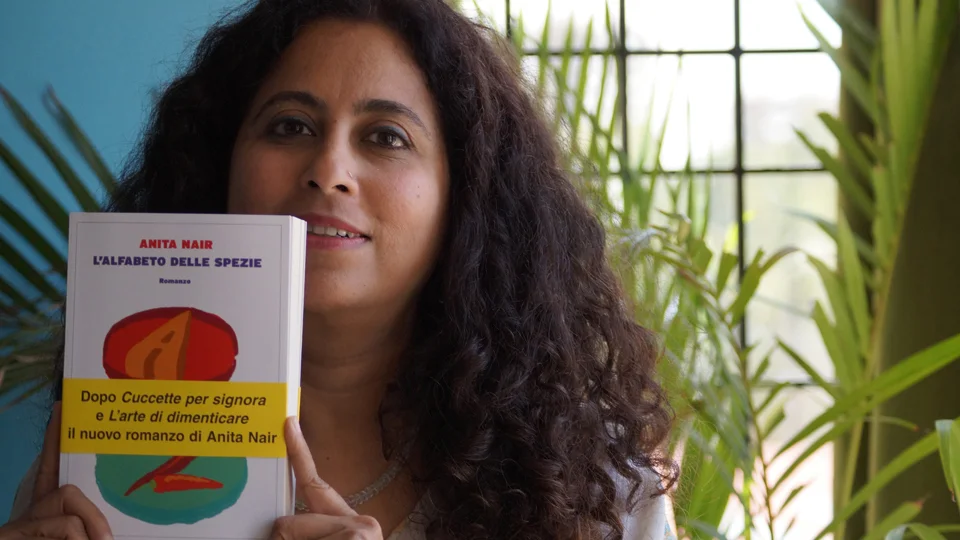
  • “Food as a metaphor” is now a book, L’Alfabeto Delle Spezie, and is out today

    The story of how a book was born and the writing of another was resuscitated: Last September I was in Sarzana Italy as a speaker at the Festival of Ideas. Luigi Brioschi, President and Publishing Director of the very literary Ugo Guanda Editore and my publisher in Italy was there as well to hear me speak. Women for Expo had just announced that I had been chosen as one of their global ambassadors. After the lecture as we walked towards the restaurant for lunch, I was talking to Luigi about how the writing of Gowda 2 had hit an impasse. The subject was bleak and what I had researched and written about until then had left me in a deep dark space. The pointlessness of existence, the depravity of human beings, our inability to deal with social ills even when it was staring us in our face – all of it had stilled my words.

    I am not sure if Luigi was trying to help me erase the images that were haunting me and freezing my mind or he was just being a good publishing director when he asked if I would write a story for him. Use food as a metaphor, he said. I would like to believe it is a combination of both for suddenly I felt something flower in me. An idea that I had been toying with since May 2013 suddenly seemed the best place to begin. I am not sure what it will be but I certainly will, I said feeling a frisson of excitement. Seated beneath a bower of leaves, all of us there that day drank to the new book whatever it would be.

    The story became a novella and Luigi who read it as soon as it was done wrote back: the food novella is a brilliant small book. Very brilliant, and perfectly architected.

    In less than a year the book was written, translated by my dear friend and translator Francesca Diano and will be published in Italy today as L’Alfabeto Delle Spezie.

    It is a special book for me for it is a story that shattered the freeze in my head and heart, and allowed me to resume Gowda 2 again. It is also a book I enjoyed writing for the sheer unabashed fantasy of a love affair melding with food was exactly what I needed to heal.

    Alphabet Soup for Lovers will be published by HarperCollins India and Mathrubhumi books later this year.
     
    Anita Nair / Image Credit : Hareesh P Warrier
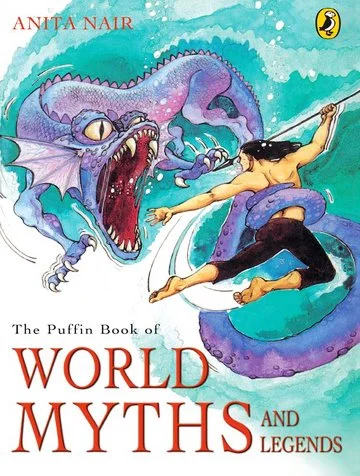
  • The Puffin Book of World Myths and Legends | Of the myths that first enchanted me, and my tribute

    Fairy tales, folk tales, mythology – like every Indian of my generation, these were part of my growing up years. Some I read. Some I heard. But everything I read and heard was confined to the ever popular Greek and Roman mythology, the Hindu Epics, the Panchatantra, the Jataka tales and the fairy tales of Hans Christian Anderson and the Grimm Brothers. In my late teens I chanced upon a world dictionary of myths which in a line or two described myths and legends from different parts of the world. Somewhere deep within me I knew an urge to re- tell them as proper stories.

    Probably I even first cut my writing teeth on them. Creating characters, situations and dialogue from a mere kernel of a myth. I wrote them and filed them away not knowing what I would ever do with them. Until many years later Penguin India wanted to know if I would like to try my hand at writing for children. I have a book already written, I said almost apologetically pulling out typewritten papers from the time I had clack – clacked them into my second hand portable typewriter. All I needed to do was revise it as I transcribed it into the computer.

    In 2004, Puffin India published it as the Puffin Book of World Myths and Legends. It was my first published title for children. And nothing gives me greater sense of joy than when I realize that this is a book that continues to enchant young readers just as the myths first enchanted me.

    The Puffin Book of World Myths and Legends will be available at all online retail stores from June 7th 2015 and in book shops 4-5 days thereafter.

  • The falling of the drop

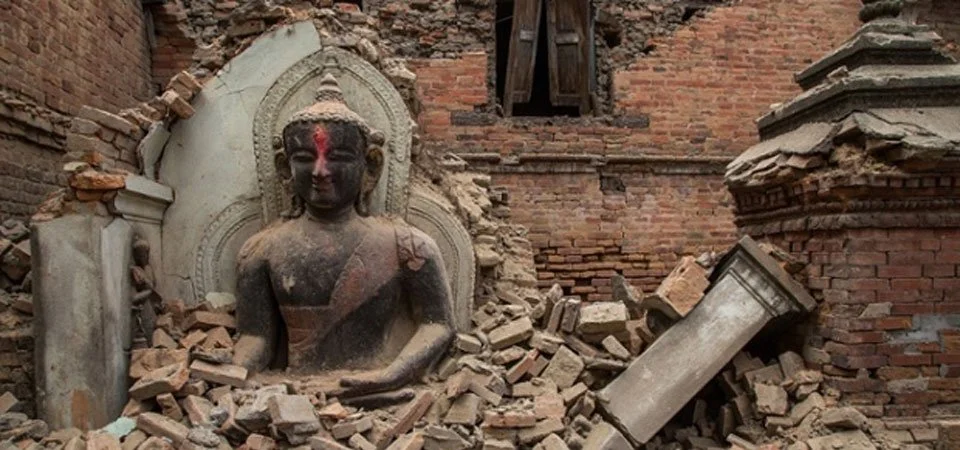
    Image Source, Credit & Courtesy : The Guardian

    Who knows what caused the earth to move last Satuday morning? Somewhere in the sea bed, for some untold reason, due to some unforeseen cause, there was a release of energy. Such was the power of that fount of energy that it travelled through a fault line on the sea bed and through land traversing four countries. Dhaka in Bangaladesh, New Delhi in India and Lahore in Pakistan but it was high in the Himalyan Kingdom of Nepal that the energy located itself. An epicentre that forever changed the lives of a land and its landscape.

    In metaphysics, the Bindu or dot is considered the point at which creation begins. An energy deposit which can in turn radiate energy. In tantric iconography, a Bindu is thought to be as Shiva; all of creation and destruction. In Buddhism, a Bindu is the falling of the drop. And on April 25th it seemed iconography, philosophy and a malevolent force of destruction fell as a 7.9 magnitude drop some 55 kms off Kathmandu.

    I was just about finishing my preparations for a long sabbatical from everything. As part of that exercise, I had deactivated my TV and the internet at home. I had gone into my office late in the morning to finish checking in online when the news of an earthquake in Delhi flashed on Facebook and Twitter. I dismissed it as the usual tendency to hyperbole so prevalent in the lexicon of social media. We do not smile: we Lol or Rofl. We do not cry, we Col. Until I saw that devastation had happened elsewhere.

    The falling of the drop had made the earth quake in Kathmandu. Like a roller-coaster ride that had gone horribly wrong in an amusement park, one of the most sought-after destinations of the world was no more. Snow avalanched down the slopes of Mount Everest. Buildings fell. Temples and towers lay in ruins. People were buried under rubble or swept away. And Kathmandu and its surrounding areas that the world flocked to – climbers, dope heads, families on vacation, loners seeking salvation, the philosopher and the pervert, the religious and the rambunctious, the monk and the hippie – saw a deathly stilling.

    The world is rushing to assist with rescue efforts. And amidst all the suffering, the sordidity of a nation that is ranked 54th in worst of 81 counties on the Global Hunger Index comes to the fore. Take this: Nepal apart from filling the brothels in India and other parts of South Asia is also home to a baby factory. There are reports of Israel sending incubators to help transfer to safety about 24 babies born in the past few days to surrogate mothers in Nepal to Israeli parents.

    I trawl the Internet to read more. The body count is rising by the minute. The stories of the dead and the injured are making the rounds. The list of the devastation caused is soaring. I take a deep breath and ask myself why? We humans have contributed to all the natural disasters with our selfish plundering of the earth and with our callous disregard for the environment. But this time we are probably as much as the culprits as the drop that fell. And it occurs to me that the people of Nepal are paying the price for the human greed for satiation.

    Overpopulation has strained the carrying capacity of the Middle hills especially in the Kathmandu valley. With the depletion of forest cover for crops, fuel and fodder, erosion has lead to flooding. Our quest for Nirvana, be it through mountaineering or marijuana or make-believe has made us seek destinations that are not equipped to handle surging human inhabitation. We capitalise on a poor economy to make it ours to fulfil our shallow needs. We exploit nature because we think we can. The quiet of the mountains throbs with incessant chatter and the clang of the cash register.

    We take a mountain kingdom and transform it into rubble just as if we had buried sticks of dynamite five feet apart through its length and breadth. In many ways with our disregard for nature and eco-systems, we caused the drop to fall.

    And it is a collective guilt that we must acknowledge and seek to make amends. For this is merely a warning of what awaits us.

    It would do well to remember that the earth is not ours to do with as we please.

    We are all only passing through.

    Anita Nair

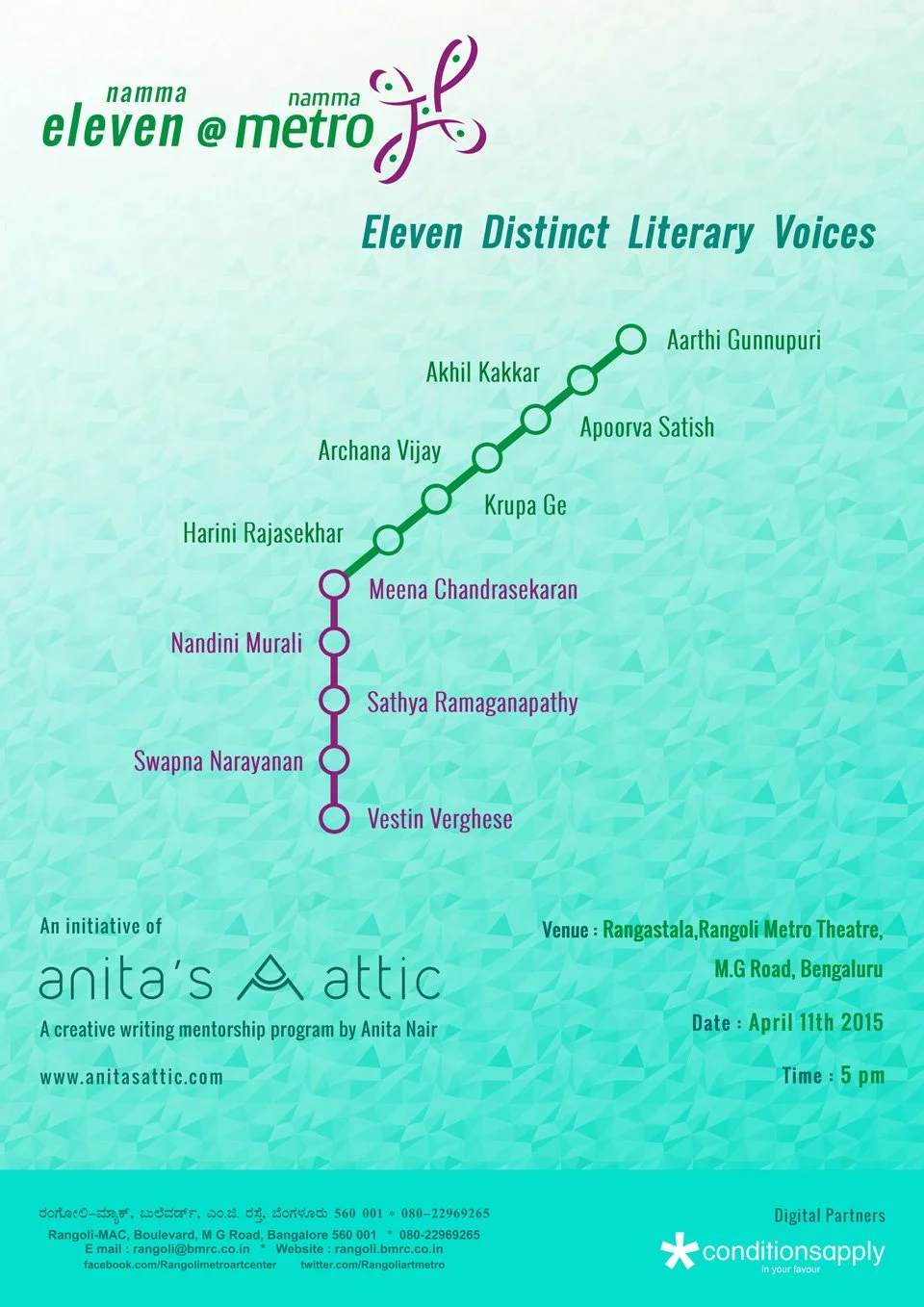
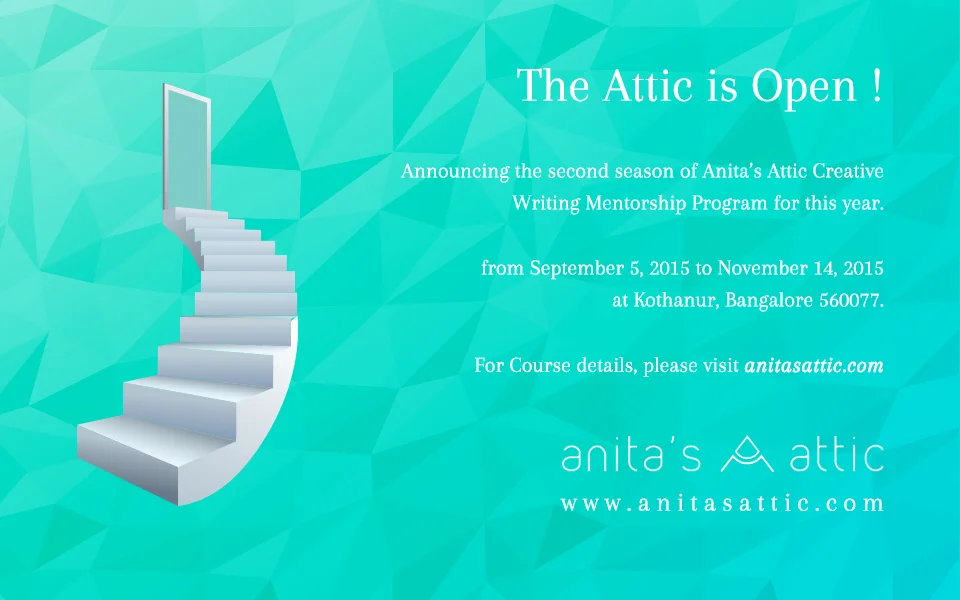
  • The Grand Finale to Season 1 of Anita’s Attic at Namma Metro, MG Road, Bengaluru

    The Inaugural Class-Anita's Attic-Creative Writing Mentorship Program

    You are cordially invited to the graduation ceremony and celebrations of the first batch of writers graduating from Anita’s Attic Creative Writing Mentorship Program.

    Jayanth Kodkani – Deputy Resident Editor, Times of India Bengaluru has graciously consented to be the Chief Guest for the graduation ceremony. Please do join us as the Graduating Class read out from their live projects at the Rangoli Metro Theatre, MG Road Bengaluru, on April 11th 2015 between 5 – 7 pm.

    The Inaugural Graduating Class

    Vestin VergheseHarini Rajasekhar
    Akhil KakkarMeena Chandrasekhran
    Apoorva SatishNandini Murali
    Archana VijaySathya Ramaganapathy
    Krupa GeSwapna Narayanan

    Look forward to seeing you on

    Date : April 11th 2015
    Time : 5 – 7 pm
    Venue : Rangoli Metro Theatre, MG Road Bengaluru

  • Aditi De | A rainbow comes a-visiting to Anita’s Attic

    It was the penultimate session of Anita’s Attic and over the course of the last eleven weeks, my writers had met an assortment of literary people. I saw their morale rise and fall; I saw energies flag and then revive; I heard doubts they voiced, the doubts they didn’t. I tried to hold their hand as much as I could but eventually I thought they needed to hear from someone who after a career of meeting deadlines now chose to make her own and motivate herself with the passion she felt for words and joy that filled her when she wrote.

    Many writers of my generation cut our publishing tooth on a page called YOUTHINK in the Indian Express. I am not sure if it was the new Indian Express then. But apart from Harry Miller whom I worshiped, the only other name I knew in the newspaper was Aditi De. Soon as the person one sent off one’s heart and soul out to every few weeks, she became someone who could determine what your state of mind was like. Euphoria if a piece was accepted. Anxiety if one didn’t hear from her. Anguish if a rejection slip came my way.

    Over the years Aditi and I met, and perhaps one of my true moments of accomplishment was when she interviewed me after my first novel The Better Man was published.

    Aditi came. Aditi saw. Aditi conquered.

    At the end of the session at Anita’s Attic, one of the writers described her as a rainbow. Thank you Rainbow De for putting a smile on my writers faces just before they went forth on their own.

  • Karthika VK, publisher, HarperCollins, on writing despite all odds, at Anita’s Attic

    A mythical beast called a publisher.

    As an unpublished writer, the image of a publisher in my mind was of a man who was part Karl Marx, part Freud, part Julius Caesar and part D. H. Lawrence. I imagined him in a suit smoking a pipe. I imagined him sitting at a long table with nothing on its surface except his gold pen, spectacle case and an ash tray. I imagined a publisher who did nothing but sign large publishing advance cheques for writers before going off to his club to drink a whisky and eat smoked salmon sandwiches with which ever literary great he was wooing at that point.

    I was the child with nose pressed against the glass looking in and marveling. My first book was published and and I met my publisher who was staying with the Governor of Karnataka. He took me for a walk around the gubernatorial grounds, fed me cucumber sandwiches and tea and as we chatted, I noticed that he had a gold pen and a spectacle case on the table before him.

    But then my first novel happened and I moved to a new publishing house and a new editor. She looked nothing like Marx, Freud, Caesar or Lawrence but she had them all within her and so much more. Over the last 17 years, she became my editor, publisher and dearly beloved friend. And that is the image of a publisher I wished for my writers at Anita’s Attic to see.

    For the 10th session of Anita’s Attic, Karthika VK, publisher, HarperCollins India talked to the writers telling them of what lies ahead and what it takes to keep faith and write despite the odds and obstacles.

  • Sudeshna Shome Ghosh, editor, at Anita’s Attic

    Very often unpublished writers imagine a situation where the editor of a large publishing house reputed to offer million dollar advances to unknown names would fling open the door of his cabin to the writer hovering outside with a 350-page manuscript typed in single space and say: “I don’t want to know why you’re here. Just come in, and sit down. Here, this is my favourite chair. Is it sufficiently close to the AC? Take off your shoes, please — no, let me help you; my secretary will wash your feet. We were just about to have a biriyani; won’t you join us? How about a glass of tender coconut water? Eat, drink your fill; make a few long distance calls. Then tell me, when you’re ready, who your parents are and where you come from and the reason that brings you here. And then I am going to take this day off and read every word you have written.”

    The truth is something else. And it was to talk about the reality of the editorial process and how the publishing industry functions that I thought it best to invite one of my editors Sudeshna Shome Ghosh with whom I worked on three of my children’s books to talk to the writers at Anita’s Attic.

    Needless to say the session was informative, fun and nipped in the bud many delusions of what awaits a writer :).

    Thank you Sudeshna for saying it as it is without dampening dreams.

  • Harimohan Paravu, fast bowler, management mentor, and fine writer at Anita’s Attic

    Sometimes every writer aspiring to be an author needs a reality check.

    Writers need to hear someone who doesn’t mince words about what it is really like. Writers need to travel with someone who from another world made an entry into the literary world. Writers need to learn from someone who manages to retain his passion for literature no matter what.

    For the 8th session of Anita’s Attic, Harimohan Paravu, fast bowler, management mentor, and fine writer took the writers on a rollicking journey of what it means to be out there.

    The pace of a crease, the heart break of bowling a full toss in the literary world and then going on to deliver a yorker to clean bowl his way into a movie deal.

    “50 Not Out Book” by Harimohan Paravu Launch, with VVS Laxman

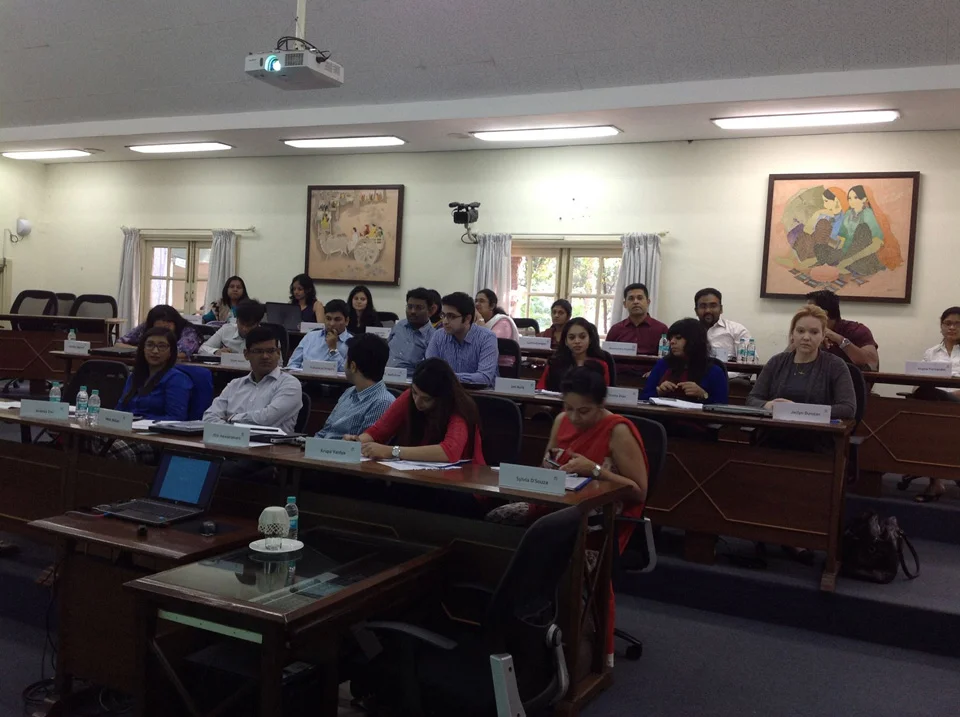
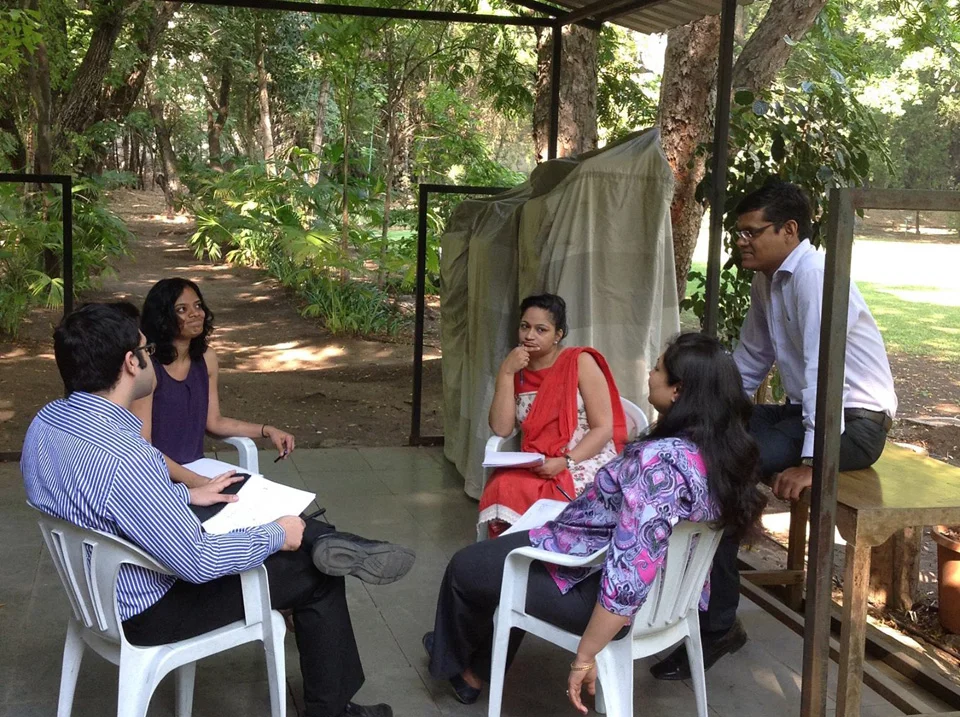
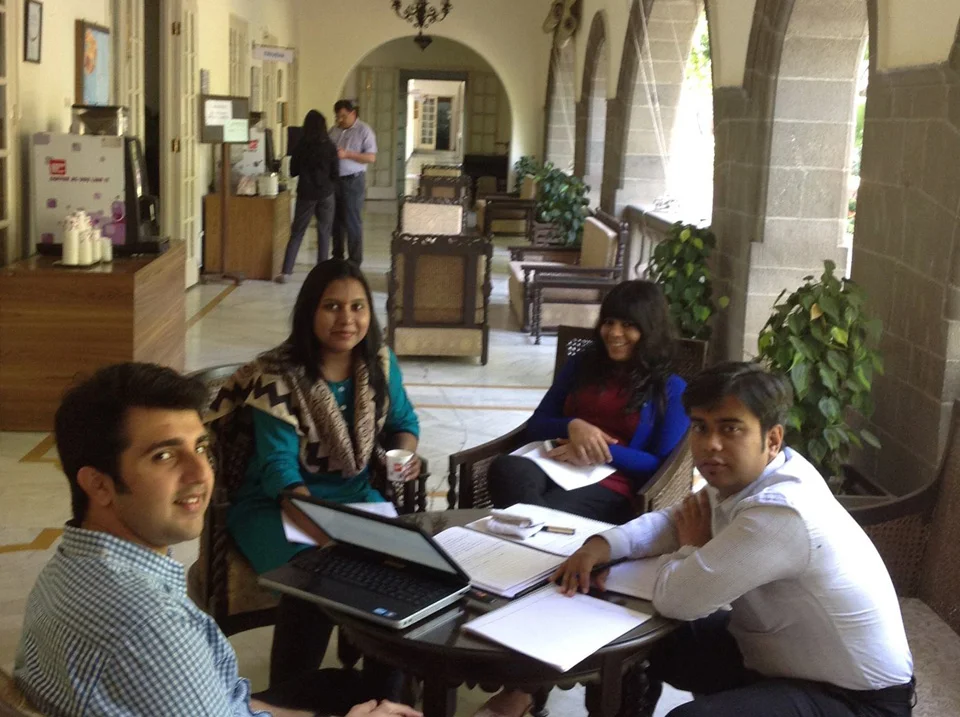
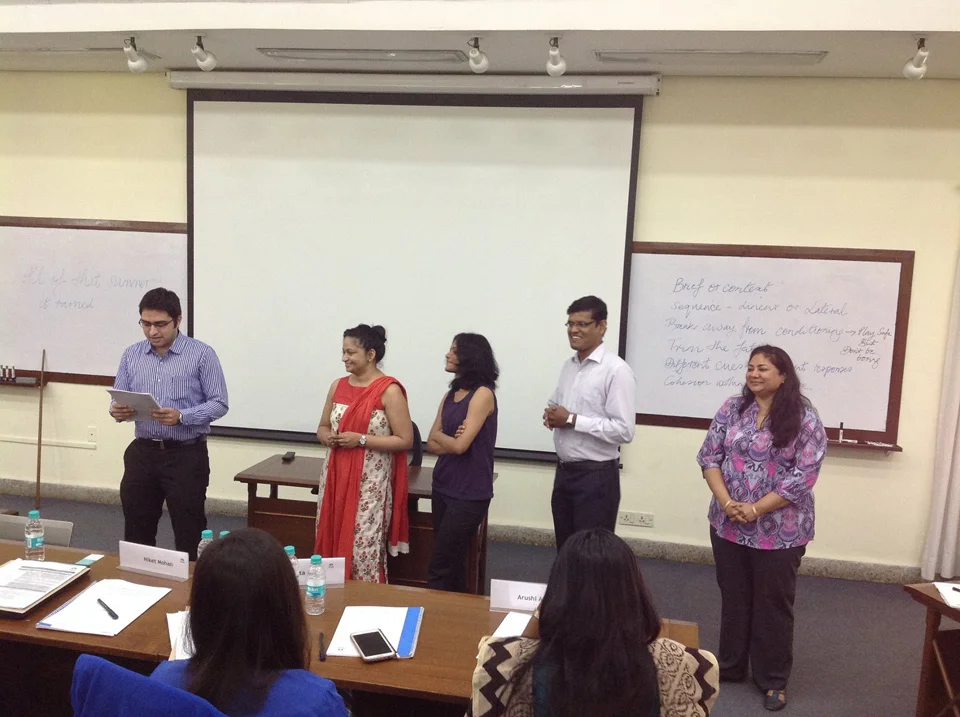
  • A 2-day Creative Writing Workshop at Tata Management Training Center, Pune

    There is nothing more satisfying for a teacher than to realize that her students have absorbed all that she has had to impart.

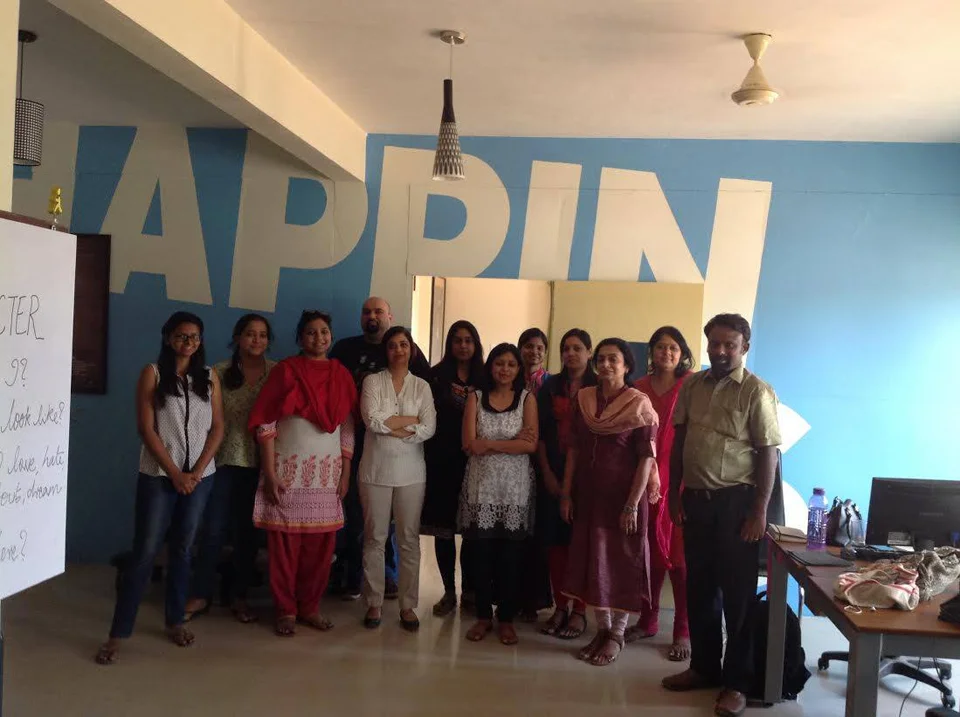
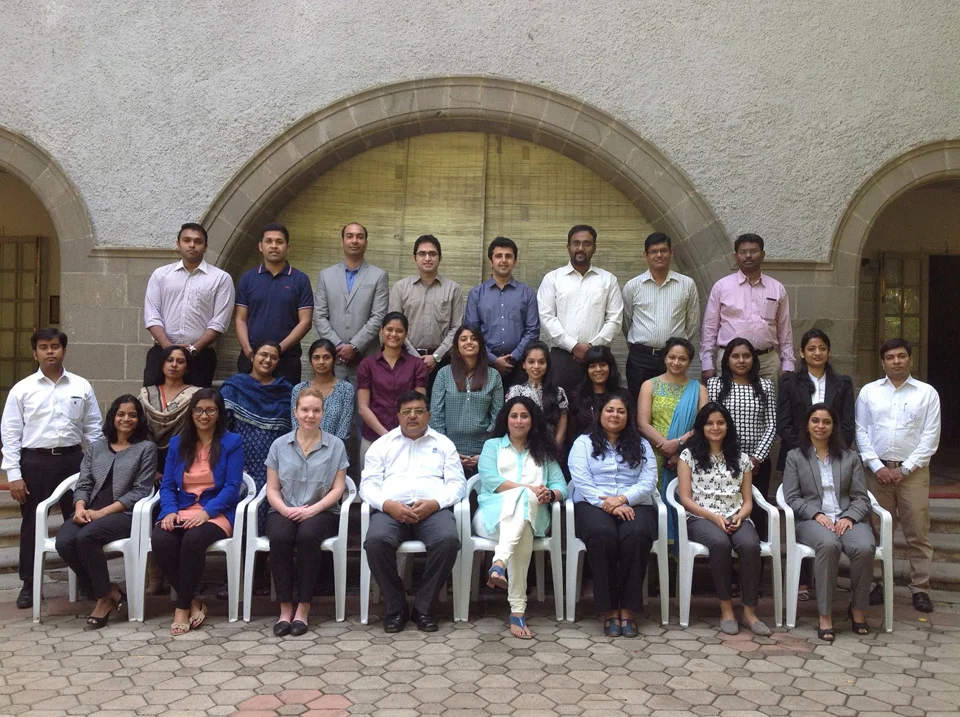
    It was the first Anita’s Attic offsite outside Bangalore for 26 Tata-ites at the Tata Management Training Centre. I didn’t know what to expect in terms of the participants, their level of enthusiasm and how together we were going to make a difference.

    Much as organisations want to enhance their employees talents, the bottom line is how would they use these learnings at the workplace. Happily enough, through presentations, Q & A sessions, individual and group assignments, we discovered that they had ample room to use the Anita’s Attic experience in several ways.

    As for myself, I discover that I had immense fun sharing my understanding of writing with the group.

    Ultimately it is all about this one principle I believe in : if it isn’t fun, I won’t do it!

    The Tata Management Training Centre